Why were all subzones relaxed over the holidays?
WMZs were not active over the holidays (Dec. 22, 2025 - Jan.5, 2026), consistent with past practice, due to increased on-street parking as residents travel and visit with family and friends.
Work did not stop during this time period. Crews continued maintenance on primary, secondary and tertiary streets and also focused on removing snow from 27 school zones.
How do I know if I am included in the Winter Maintenance Zones program?
Use the “Find Your Zone” Tool (above) and enter your street address to find out if you are included in the Winter Maintenance Zones program.
Regular winter maintenance is done on more than 510 roads in Fort McMurray, but how snow is cleared depends on the kind of road.
The busier roads (Primary, Secondary and Tertiary Routes) are prioritized and are not included in the Winter Maintenance Zone (WMZ) program. These Primary, Secondary and Tertiary Routes are not affected by subzone activations, and receive more regular winter maintenance than residential streets included in the WMZ program because of their priority status.
I know I'm included in the Winter Maintenance Zones program. But what's my subzone?
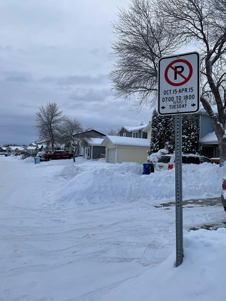
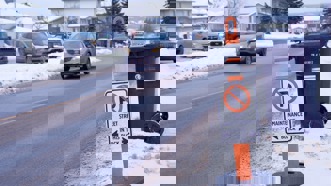
To learn your subzone, check the permanent “no parking” signposts on your street, or use the “Find Your Zone” online tool (above) and enter your street address.
My subzone was activated but my street didn't receive maintenance. Why?
Occasionally your subzone may be activated, but no winter maintenance will happen on your street. This usually happens when crews are removing snow or there are multiple vehicles parked in active subzones, slowing down progress and causing areas to be missed. New snowfall, emergencies, or other unexpected delays may also result in challenges with scheduling.
Winter maintenance is always scheduled based on the condition of roads. This means if your street didn’t receive maintenance the last time your subzone was active, it will be tracked and scheduled for future maintenance.
How does driveway windrow removal work?
Windrows (snowbanks) created from a plow that are higher than 15 cm are being removed from the end of driveways in active subzones (also known as Winter Maintenance Zones or WMZs). The decision to help residents remove larger than normal windrows was made after reviewing the results from the Winter Maintenance public engagement and the daily feedback received.
Residents are responsible for clearing windrows smaller than 15 cm from their driveways within 48 hours after winter maintenance has occurred. The busier streets that aren't included in the WMZ program receive winter maintenance more frequently, resulting in smaller windrows that residents are responsible for removing.
Who is responsible for clearing the sidewalk in my neighbourhood?
Sidewalks and walkways next to your home are your responsibility and must be cleared within 48 hours after a snowfall.
I have mobility challenges. Can someone help me clear my driveway or walkway?
Community members with mobility challenges who need help shoveling can register for the Snow Angels program
How can I help community members in my neighbourhood who have trouble clearing their driveway and sidewalk?
You can become a Snow Angel! Volunteers are always needed every winter. Sign up and you can help clear a path through winter for community members in need!
How can I give feedback on winter maintenance?
If you have questions or feedback about winter maintenance operations, you may submit them via Pulse by calling 780-743-7000 or sending an email to pulse@rmwb.ca. Feedback and relevant inquiries will be passed on to the Roads department.
How do I learn more about the Winter Maintenance program?
The Winter Maintenance program was designed using feedback from residents and is aligned with the Urban Ice and Snow Control Policy approved by Council in 2016. To learn more, visit Snow Clearing FAQs
How do I know when Winter Maintenance Zones (WMZs) and Subzones are active or relaxed?
You can keep up to date on the status of WMZs in the following ways.
I rely on on-street parking. What are my other options when my WMZ is active?
Winter Maintenance Zones will only be active on one weekday between 7 a.m. and 6 p.m., therefore you'll be able to make advance arrangements to move your vehicles if necessary.
Parking alternatives include driveways, garages, or sharing a parking space with a neighbour or friend.
Additional parking can be found in public parking lots in Fort McMurray.
On-street parking may also be available along primary and secondary routes when your Winter Maintenance Zone is active. Other parking restrictions may apply along these routes, so watch for any posted signage.
If there are vehicles are parked on my street when my WMZ is active, how will that affect snow clearing?
Snow removal equipment is large, so a lot of space is needed to get into residential streets and perform maintenance. Even one or two vehicles left along the street can cause delays and create challenges for completing winter maintenance for the entire subzone on its given weekday.
Can I park in my alleyway when my Winter Maintenance Zone is active?
No. As per Bylaw 21/010, parking in alleyways is not permitted, in order to provide access for emergency response vehicles.
Will Winter Maintenance Zones affect on-street parking when I take my kids to school?
No. Winter Maintenance Zones apply to residential streets only. Schools are located along secondary routes, and Winter Maintenance Zones do not apply in these areas.
Do Winter Maintenance Zones apply to both sides of the street?
Yes. Vehicles need to be removed from both sides of the street to allow our maintenance equipment to enter and safely clear the entire street.
I live in a condo. How do Winter Maintenance Zones apply to me?
Condo corporations are responsible for snow and ice control on their respective properties, so WMZs do not apply to condo property specifically. However, condo owners could still be affected if they are parked on the street while visiting friends or family, or out doing regular activities.
What is the penalty for on-street parking while my Winter Maintenance Zone is active?
Residents are responsible for complying with parking regulation as set out in Bylaw 21/010. Vehicles parked in an active Winter Maintenance Zone could be ticketed and towed to an impound yard. Parking tickets and towing fees are the responsibility of the vehicle owner.
The fine for a Notice of Violation is $120 for parking in an active Winter Maintenance Zone. Impound and towing fees may also apply.
FMG Energy Services administers the towing and impound fees.
|
Item
|
Amount
|
|
Storage for each 24-hour period, or part thereof
|
$22 per vehicle
|
|
Vehicle towing (cars, SUVs, pickup trucks)
|
$90 per hour per vehicle. Average of 2.5 hours per vehicle – find out why.
|
|
Larger vehicle towing (tractor trailers, big rigs)
|
$135 per hour per vehicle
|
|
Oversized vehicle removal that requires specialized equipment (rate covers all tools and equipment)
|
$155 per hour per vehicle
|
|
Roadway or equipment clean-up from spills when/as required
|
$60 per hour per vehicle
|
|
Site clean-up from debris/spills
|
$60 per hour
|
FMG Energy Services accepts cash, debit and all major credit cards.
My vehicle has been towed from an active Winter Maintenance Zone. Where is my vehicle and how much will it cost to retrieve it?
Towing company
Towing services are provided by an independent, third-party company. All questions and arrangements related to towing and impound services should be directed to the company below.
FMG Energy Services
133 MacDonald Crescent. Google Map
Phone
Call 780-838-0929 seven days per week from 7 a.m. to 10 p.m.
Office hours
- Monday through Friday – 7 a.m. - 7 p.m.
- Saturday: 8 a.m. – 5 p.m.
- Sunday: 9 a.m. – 4 p.m.
- Holidays – 9 a.m. - 4 p.m.
Arrangements can be made to pick up a vehicle after hours by calling FMG Energy Services at 780-838-0929.
Fees
FMG Energy Services administers the towing and impound fees.
|
Item
|
Amount
|
|
Storage for each 24-hour period, or part thereof
|
$22 per vehicle
|
|
Vehicle towing (cars, SUVs, pickup trucks)
|
$90 per hour per vehicle. Average of 2.5 hours per vehicle – find out why.
|
|
Larger vehicle towing (tractor trailers, big rigs)
|
$135 per hour per vehicle
|
|
Oversized vehicle removal that requires specialized equipment (rate covers all tools and equipment)
|
$155 per hour per vehicle
|
|
Roadway or equipment clean-up from spills when/as required
|
$60 per hour per vehicle
|
|
Site clean-up from debris/spills
|
$60 per hour
|
FMG Energy Services accepts cash, debit and all major credit cards.
My car is parked on the street. When it's plugged in, can the extension cord run across the sidewalk?
No. It is not permitted to have an extension cord on the surface of sidewalks. However, extension cords may be suspended above sidewalks, no less than 2.4 metres – between Nov. 1 and Mar. 30. This will ensure safety of pedestrians, and also allow for residents to keep their vehicles plugged in during winter months.
Why is there a bylaw for extension cords on sidewalks?
Extension cords that are running across sidewalks are a hazard for snow removal crews, as well as for pedestrians and homeowners. To avoid injury to people or damage to equipment, cables need to be visible.
What is the distance across my property that the municipality has right-of-way?
A right-of-way is a type of easement or access reserved over the land for transportation purposes and can be used for a sidewalk, utility, or the road itself. This property is owned by the municipality and the width of right-of-ways is based on our Engineering Servicing Standards. Many factors are taken into consideration when calculating this width and can vary based on location and road classification.
Does the RMWB have a policy for snow plowing and snow removal?
Council approved the latest version of the Urban Ice and Snow Control Program Policy (OPE – 150) on Oct. 10, 2023.
The purpose of the policy is to set winter snow and ice control standards. It helps ensure that municipal roads and sidewalks are maintained to:
- reduce hazards and economic loss,
- prioritize safe access to emergency vehicles and transit, and
- provide guidelines for management and operating personnel in the handling of winter maintenance operations.